
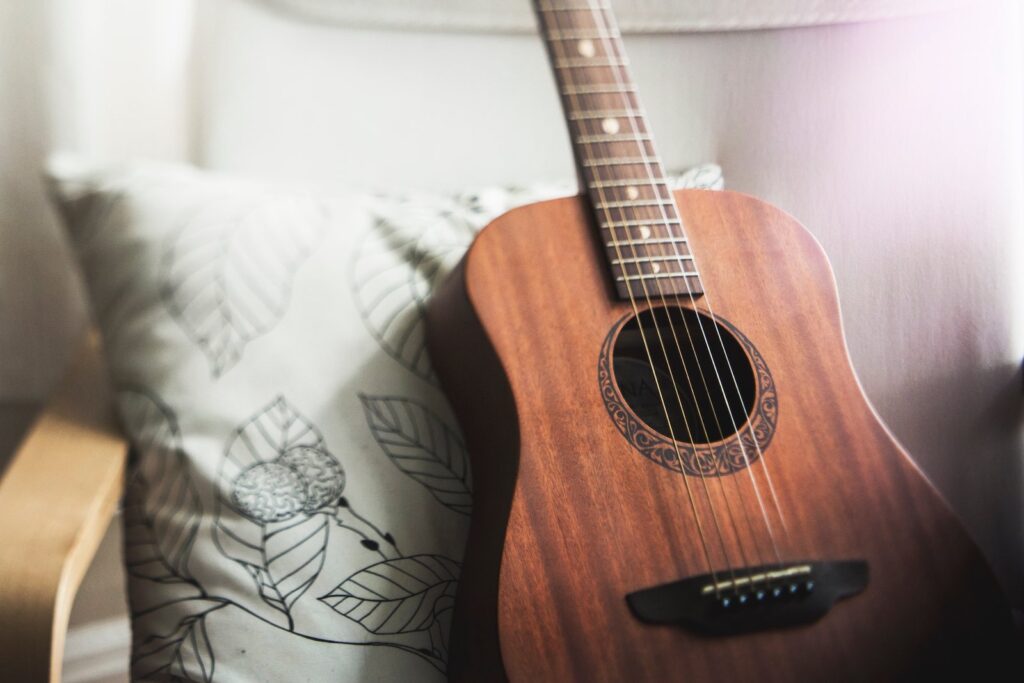
So your child wants to learn guitar — wonderful! Before the first lesson, there’s one happy hurdle: choosing the right first guitar. Walk into any music shop and the options can feel overwhelming. This guide cuts through the noise with what actually matters when buying a first guitar for your child, so you can get them started on an instrument that feels good to play.
Size matters most: match the guitar to your child
The single most important factor is size. A guitar that’s too big is uncomfortable, discouraging, and genuinely harder to learn on. Guitars come in fractional sizes, roughly matched to age and height:
- 1/4 size: ages 4–6
- 1/2 size: ages 6–8
- 3/4 size: ages 8–11 (the most popular kids’ size)
- Full size: ages 11–12 and up
When in doubt, your child’s guitar teacher can tell you exactly what size fits best — it’s one of the first things we check with new students.
Acoustic vs. electric: which should a beginner start on?
Both are fine choices, and the “right” one often comes down to the music your child dreams of playing. Acoustic guitars are simple, portable, and require nothing but the instrument itself — great for building finger strength. Electric guitars are easier on the fingertips (lighter strings, lower string height) and can be more motivating for a kid who wants to play rock or pop, but they need an amp. If your child has a clear favourite style, lean into it — motivation is everything.
Nylon vs. steel strings
For young beginners, nylon-string (classical) guitars are often the gentlest starting point — the strings are softer on little fingertips. Steel-string acoustics have a brighter, more familiar “pop” sound but can be tougher on the fingers at first. Either works; comfort is the priority for a first instrument.
How much should you spend?
You don’t need an expensive instrument to start, but avoid the very cheapest toy guitars — they often won’t stay in tune, which is frustrating and can actually slow learning. A reliable beginner guitar in the roughly $80–$200 range will serve a new student well for a year or more. Think “good enough to stay in tune and feel nice to play,” not “professional quality.”
Don’t forget the essentials
A few inexpensive extras make a big difference: a clip-on tuner (or a free tuning app), a soft case for getting to and from lessons, a few spare picks, and a simple stand so the guitar lives out in the open where your child will actually pick it up.
The most important ingredient: a great teacher
Even the perfect guitar won’t teach itself. A warm, engaging teacher who gets kids playing songs they love — early and often — is what turns a new guitar into a lifelong passion. At Annie Bonsignore Studios, our hand-picked guitar teachers specialize in keeping students genuinely excited, and every student performs publicly several times a year. Explore guitar lessons in Milton, Ontario or meet our guitar teachers.
Frequently asked questions
What size guitar should I buy for a 7-year-old?
A 1/2 or 3/4 size guitar is usually ideal for a seven-year-old, depending on their height. When in doubt, size up slightly to a 3/4, which many kids grow into and keep for years.
Should a beginner start on acoustic or electric guitar?
Both are great. Electric is a little easier on the fingers and very motivating for rock and pop fans, while acoustic is simple and portable. Choose based on the music your child is most excited to play.
Do we need to buy a guitar before the first lesson?
It helps, but it’s not essential. Many families book a trial lesson first and ask the teacher for a size and model recommendation before buying — a great way to get it right.
Ready to get strumming?
Once you’ve got the right guitar in hand, the fun really begins. Annie Bonsignore Studios offers guitar lessons in Milton for kids, teens, and adults. Book a free trial lesson and we’ll help your child fall in love with playing.


